








Sewer Line Installation in Chino, CA
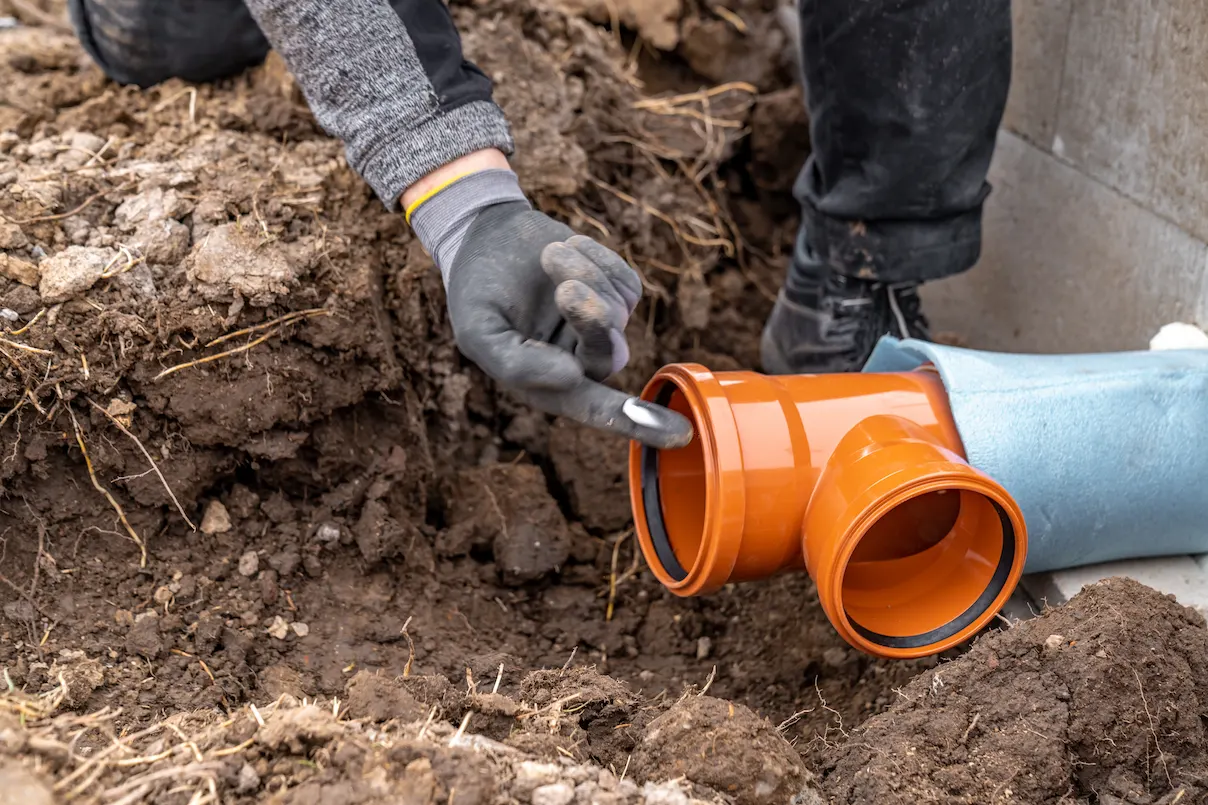
Whether you’re building a new home, adding an ADU, expanding an existing property, or connecting to the municipal sewer system, a properly installed sewer line is essential to a reliable plumbing system. J.I.G. Plumbing provides expert sewer line installation services for homeowners, contractors, and developers throughout Chino and surrounding communities. Our team handles every phase of the project, including site assessment, permitting, code-compliant installation, and final inspection. By ensuring proper pipe sizing, slope, materials, and connections, we help prevent future backups, sewage overflows, and costly repairs while delivering dependable results that stand the test of time.
When Do You Need a New Sewer Line Installation in Chino?
Many Chino property owners don’t realize they need a sewer line installation until a project is already underway — and then they’re scrambling to find a licensed plumber who can pull permits and complete the work on schedule. Understanding the most common scenarios that require new sewer line installation helps you plan ahead, budget accurately, and avoid costly project delays. Here are the situations our Chino sewer installation team handles most frequently:
- New home construction: Every new home requires a properly installed sewer lateral connecting the property's plumbing system to the city sewer main.
- Accessory Dwelling Unit (ADU) construction: Every new ADU needs a code-compliant sewer connection, whether through a new lateral or an existing sewer line.
- Home additions and new bathrooms: Adding plumbing fixtures may require sewer line extensions or upgrades to support increased demand.
- Septic-to-sewer conversion: Properties switching from septic systems need a new connection to the municipal sewer system.
- Commercial and multi-unit development: Larger developments require properly sized sewer systems designed to handle higher wastewater volumes.
- Vacant lot development: Undeveloped properties need complete sewer infrastructure installed before construction can begin.
- Complete sewer line replacement on aging properties: Older or deteriorated sewer lines may require full replacement to restore reliable performance and code compliance.
What Goes Into a Properly Installed Sewer Line — The Technical Details That Matter
- Pipe sizing: Sewer lines must be properly sized to handle the home's drainage load and meet plumbing code requirements.
- Slope and grade: Proper slope ensures wastewater flows efficiently and helps prevent clogs and backups.
- Pipe material selection: Most sewer lines use durable, root-resistant PVC pipe designed for long-term performance.
- Bedding and backfill: Proper bedding and backfill support the pipe and help prevent settling, cracks, and joint failures.
- Cleanout installation: Strategically placed cleanouts provide easy access for future inspections, cleaning, and repairs.
- City tap and connection: New sewer lines must be safely connected to the city main and approved through inspection.
- Permits and inspections: Required permits and inspections ensure the installation meets local codes and standards.
According to the Centers for Disease Control and Prevention (CDC), proper sanitation infrastructure — including correctly designed and installed sewer systems — is one of the most impactful public health advances in human history. A correctly installed sewer line protects not just your property but your family’s health and your neighborhood’s groundwater quality.
Our Sewer Line Installation Process
We visit your property, review your project plans or scope of work, locate existing utilities using 811 California dig-safe notification services, assess the distance and depth to the city sewer main, and evaluate any site-specific challenges — grade changes, existing structures, tree roots, or underground obstructions — that will affect the installation design and cost.
We provide a comprehensive, itemized written estimate covering all labor, materials, permit fees, inspection fees, city tap fees (where applicable), excavation, bedding, backfill, and surface restoration. You'll know the complete cost of your project before we schedule a single shovel swing.
We submit permit applications to the City of Chino Building & Safety Division, coordinate with Chino's Public Works department for street excavation permits where required, and submit 811 underground utility locate requests a minimum of two working days before any digging begins.
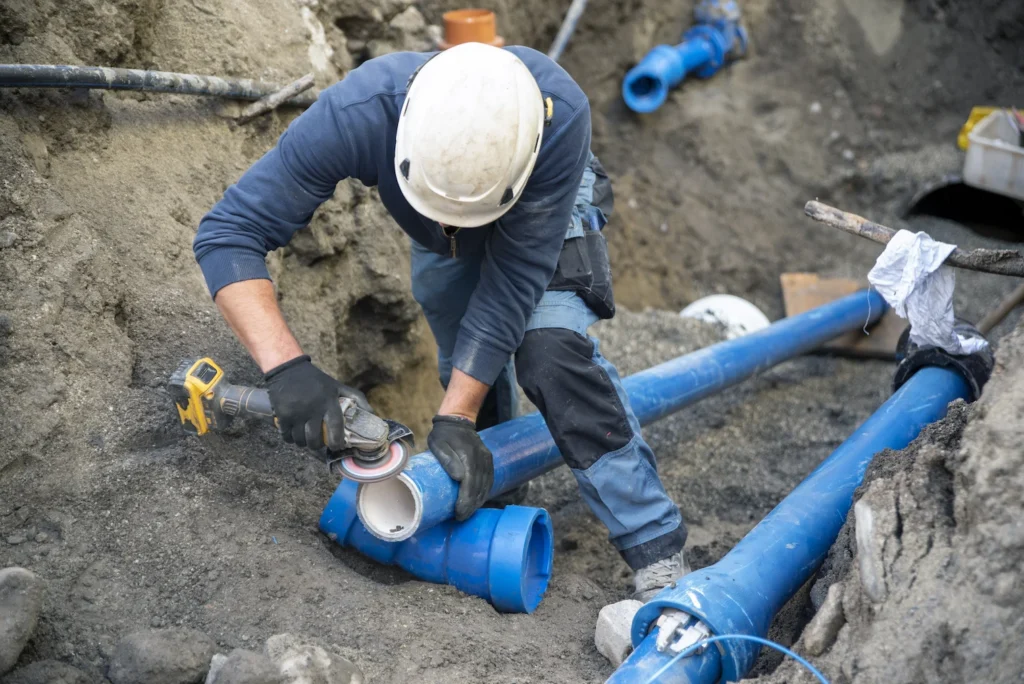
Our crew excavates the trench to the required depth and slope using appropriate equipment for the project scale — from compact excavators for tight residential yards to full-size trenching equipment for longer commercial runs. All excavations are performed in compliance with Cal/OSHA trenching and shoring safety standards.
We lay the properly sized pipe on a prepared granular bed, make all joints and connections, install cleanouts at all code-required locations, and verify slope with a laser level before any backfill is placed.
We schedule and coordinate the city inspector's visit to review the open trench installation before backfilling. Our installations consistently pass first-inspection because we don't cut corners on any of the details that inspectors check.
After passing inspection, we backfill the trench in compacted lifts to prevent future settlement, restore any concrete or asphalt that was cut for street or driveway access, and leave your property clean and presentable.
We walk you through the completed installation, provide you with copies of all permits and inspection sign-offs, and document the as-built location and depth of your new sewer line for your property records.

Sewer Line Installation for ADUs — What Chino Property Owners Need to Know
- Every ADU must have its own sewer connection. Any ADU with a bathroom or kitchen requires a code-compliant sewer connection.
- Connection options depend on your property layout. ADUs may connect to an existing sewer lateral or require a separate line, depending on the property.
- Capacity of the existing lateral matters. Existing sewer lines should be evaluated to ensure they can handle the additional wastewater load.
- Plan for sewer early in the ADU design process. Early planning helps avoid construction delays, redesigns, and unnecessary costs.
Sewer Line Installation vs. Sewer Line Replacement — Understanding the Difference
- Sewer line installation refers to putting new sewer pipe infrastructure in place where none previously existed — for new construction, ADUs, additions, lot development, or septic conversions. The work involves routing, sizing, trenching, and connecting pipe to the city main from scratch.
- Sewer line replacement involves removing and replacing an existing sewer lateral that has failed, deteriorated, or been damaged beyond repair. The routing generally follows the original pipe path, but the scope may include trenchless methods that don't require full excavation. Learn more about our sewer line replacement and trencless sewer repair options.
Why Chino Homeowners & Contractors Choose J.I.G. Plumbing
A sewer line is a critical long-term investment, and J.I.G. Plumbing delivers reliable installations backed by licensing, insurance, code-compliant workmanship, and extensive experience with residential, commercial, and ADU projects. From permits and inspections to precise grading and complete documentation, our team manages every step to ensure a smooth installation and lasting performance.