























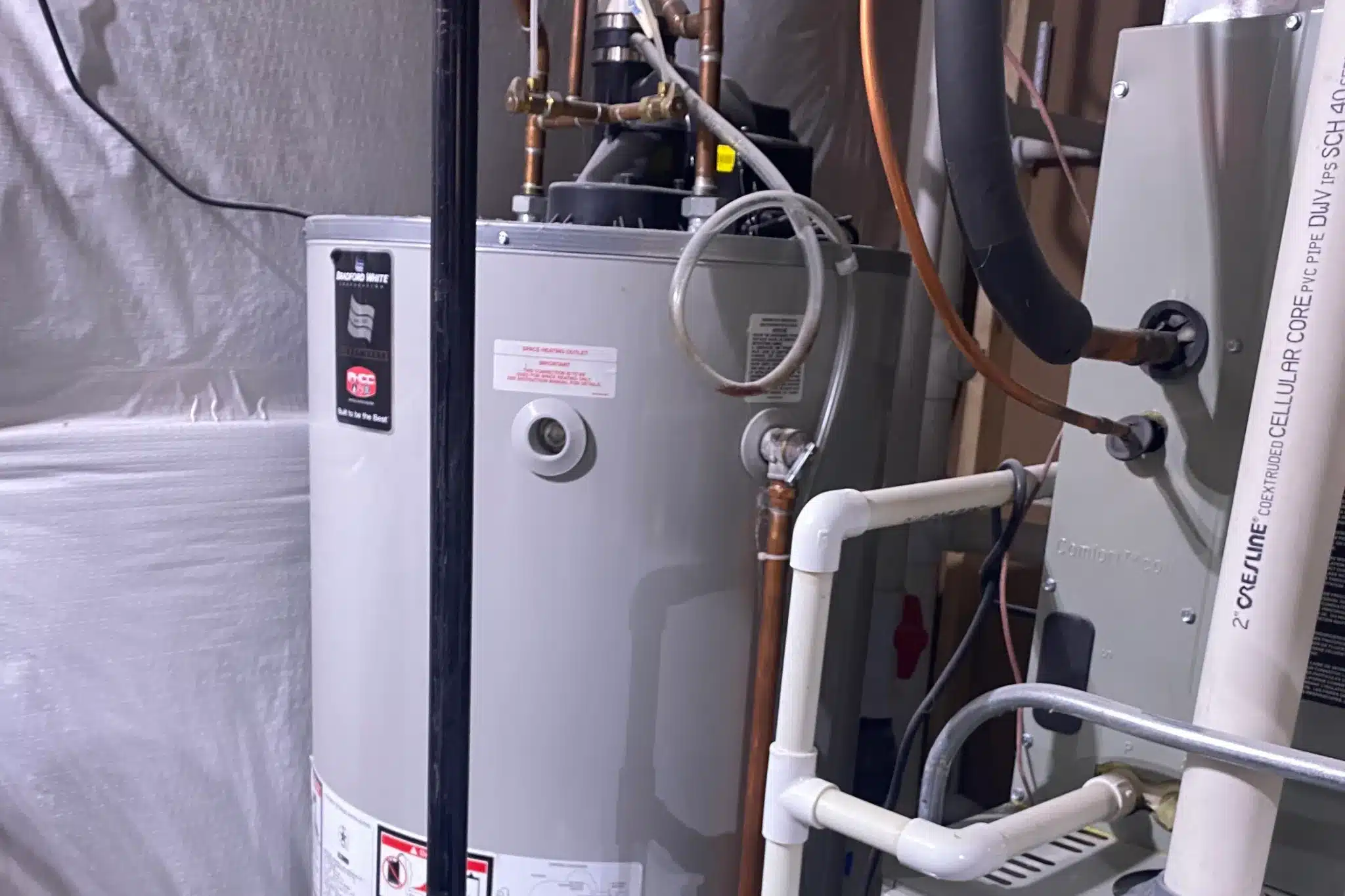
Discovering water around your water heater can be stressful. Even a small puddle can raise concerns about water damage, loss of hot water, and whether the entire unit needs to be replaced.
A leaking water heater should never be ignored. Some leaks come from a loose connection or replaceable valve, while others indicate that the tank is corroding from the inside. Determining where the water is coming from is the first step toward understanding whether the problem can be repaired or requires a new water heater.
For homeowners in Chino, Rancho Cucamonga, Ontario, Covina, Corona, and nearby Southern California communities, acting quickly can help prevent damage to flooring, drywall, cabinetry, and personal belongings. Here are the most common reasons water heaters leak and the signs that it is time to call a professional plumber.
First, Make Sure the Water Is Actually Coming From the Water Heater
Water near the base of a water heater does not always mean the tank itself is leaking. Condensation, a nearby pipe, an appliance drain, or another plumbing fixture may be responsible.
Look carefully at the area above and around the unit. Water can travel along pipes and drip onto the water heater, making the source difficult to identify. Check the hot- and cold-water connections at the top of the tank, the nearby plumbing lines, and the surrounding walls or ceiling.
Condensation may also form on the outside of a tank under certain conditions. However, a recurring puddle or steady dripping should be professionally inspected rather than dismissed as normal moisture.
If you cannot determine where the water is coming from, J.I.G. Plumbing offers professional water leak detection and repair to help locate the source before it causes more extensive damage. J.I.G. Plumbing serves Chino and surrounding Southern California communities with residential plumbing and water heater services.
1. Loose Hot- or Cold-Water Connections
The pipes connected to the top of your water heater carry cold water into the tank and hot water out to the rest of your home. Over time, fittings can loosen, seals can deteriorate, or corrosion can develop around the connections.
A leak from the top of the unit may appear as dripping around a fitting or moisture running down the side of the tank. While tightening or replacing a connection may resolve the problem, homeowners should avoid making adjustments without first identifying the type and condition of the piping.
Improperly tightening a fitting can damage the connection or make the leak worse. If you see corrosion, significant water flow, or moisture near electrical components, turn off the water heater and contact a licensed plumber.
2. A Leaking Temperature and Pressure Relief Valve
The temperature and pressure relief valve, commonly called the T&P valve, is an important safety component. It is designed to release water if the temperature or pressure inside the tank rises to an unsafe level.
A small amount of water may occasionally discharge during testing, but continuous dripping can indicate a faulty valve, excessive water pressure, thermal expansion, or dangerously high temperatures inside the tank.
Do not plug, cap, or disable the discharge pipe to stop the leak. Doing so can prevent the valve from relieving pressure and create a serious safety hazard.
A plumber should inspect the valve and determine why it is releasing water. Replacing the valve alone may not solve the problem if excessive pressure or another system issue is responsible.
3. A Loose or Damaged Drain Valve
Tank-style water heaters have a drain valve near the bottom that allows the tank to be emptied and flushed. The valve may begin leaking if it was not fully closed after maintenance, if its washer or internal seal has deteriorated, or if the valve itself has cracked.
A minor drip from the drain valve may be repairable. However, corrosion around the valve or water appearing from the tank body nearby can indicate a more serious issue.
Because water inside the tank can be extremely hot, avoid removing or manipulating the drain valve while the unit is operating. Have a plumber inspect the connection and determine whether the valve can be repaired or needs to be replaced.
Regular water heater maintenance can help identify valve problems, sediment accumulation, corrosion, and other concerns before they lead to a larger leak. J.I.G. Plumbing’s maintenance services may include flushing tank-style units, inspecting anode rods, testing the pressure relief valve, and checking for leaks.
4. Excessive Water Pressure or Thermal Expansion
High water pressure places added stress on plumbing pipes, fixtures, appliances, and water heater components. If the pressure inside the plumbing system becomes too high, water may escape through connections or the T&P valve.
Thermal expansion can create a similar problem. As water heats, it expands. In a closed plumbing system, that additional volume may have nowhere to go, causing pressure to rise. A properly installed and functioning expansion tank can help absorb these pressure changes.
Signs of excessive pressure may include banging pipes, frequently dripping faucets, short appliance lifespans, or repeated leaks at plumbing connections. A plumber can test the home’s water pressure and evaluate the pressure regulator and expansion tank.
Simply replacing a leaking valve may provide only temporary relief if the underlying pressure problem is not corrected.
5. Sediment Buildup Inside the Tank
Southern California homes can experience mineral buildup in their plumbing systems and water-using appliances. Over time, sediment may settle at the bottom of a tank-style water heater.
This buildup can reduce heating efficiency, create popping or rumbling noises, and cause the tank to work harder to heat the water. Prolonged sediment accumulation may also contribute to overheating and deterioration inside the tank.
The U.S. Department of Energy recommends following the manufacturer’s directions for periodically draining water from a storage tank to remove sediment that can interfere with heat transfer and reduce efficiency. Review the Department of Energy’s Energy Saver Guide for additional guidance on water heating efficiency and household energy use.
Water heater flushing should be handled carefully. Older tanks that have not been maintained regularly may already contain weakened components, and attempting a do-it-yourself flush can sometimes reveal or worsen an existing leak.
6. Internal Tank Corrosion
A leaking storage tank is one of the most serious water heater problems. Traditional tank-style water heaters contain a steel tank protected by a lining and a sacrificial anode rod. The anode rod is designed to corrode before the tank itself does.
Once the protective components wear down, corrosion may begin attacking the tank. Eventually, small cracks or pinholes can develop and allow water to escape.
Water leaking directly from the bottom or body of the tank usually means the unit cannot be permanently repaired. Sealants and temporary patches do not restore the structural integrity of a corroded tank.
ENERGY STAR identifies visible corrosion, leakage around joints or seams, rusty water, reduced hot-water availability, and unusual rumbling as possible signs of water heater deterioration or failure.
When the tank itself is leaking, replacement is typically the safest long-term solution. J.I.G. Plumbing provides water heater repair and installation and can determine whether the leak involves a replaceable component or a failing tank.
7. A Cracked or Improperly Installed Expansion Tank
Some water heater systems include a smaller expansion tank mounted near the main unit. Its purpose is to absorb the increase in water volume that occurs as water heats.
If the expansion tank’s internal bladder fails, the tank becomes waterlogged, or its connection loosens, water may leak from the tank or nearby fittings. An incorrectly sized or improperly installed expansion tank may also fail to control pressure effectively.
Because expansion tank problems are closely connected to water pressure and system design, they should be diagnosed by a professional plumber rather than handled as a simple fitting leak.
8. Corrosion Around the Anode Rod Opening
The anode rod typically enters the water heater through an opening near the top of the tank. If the connection becomes loose or the surrounding area corrodes, water can leak from the opening and run down the side of the unit.
Replacing an anode rod at the appropriate time may help protect a tank from internal corrosion, but the condition of the tank should be evaluated first. If corrosion has already spread around the opening or into the tank body, replacing the rod may not be enough to prevent continued leakage.
A professional inspection can determine whether an anode rod replacement is worthwhile based on the unit’s age and overall condition.
Is a Leaking Water Heater an Emergency?
The urgency depends on the amount of water, the location of the leak, and whether electrical or gas components are involved.
A slow drip from an accessible connection still requires attention, but active water flowing from the tank, a rapidly growing puddle, water near electrical wiring, or signs of a gas problem should be treated as urgent.
Turn off the water heater if you can do so safely. Electric units should be shut off at the appropriate breaker, while gas units may have a clearly marked gas control. Close the cold-water supply valve to the water heater if it is accessible and functioning.
Do not enter standing water near electrical equipment, and do not attempt repairs if you smell gas. Leave the area and contact the gas utility or emergency services from a safe location.
For urgent plumbing problems, J.I.G. Plumbing offers same-day plumbing service for homeowners in Chino and surrounding areas.
Can a Leaking Water Heater Be Repaired?
Many water heater leaks can be repaired when they originate from an external component. Loose supply connections, damaged drain valves, faulty T&P valves, and certain expansion tank problems may be corrected without replacing the entire water heater.
Repair may be the practical choice when the unit is relatively new, the tank is in good condition, and the problem is limited to a replaceable component.
Replacement is more likely to be recommended when the tank itself is leaking, corrosion is widespread, the unit is nearing the end of its service life, or it has required repeated repairs. Other signs that may support replacement include rusty hot water, inconsistent temperatures, insufficient hot water, rising utility costs, and persistent rumbling noises.
The decision should consider more than the cost of the immediate repair. A plumber can help compare the unit’s age, condition, efficiency, warranty status, and repair history so you can make an informed long-term choice.
How to Help Prevent Future Water Heater Leaks
Preventive maintenance cannot eliminate every possible failure, but it can help uncover developing problems before they cause significant water damage.
A professional maintenance visit may include inspecting connections, testing the T&P valve, checking the anode rod, looking for corrosion, evaluating water pressure, and flushing sediment when appropriate. The exact maintenance needs depend on the water heater type, manufacturer recommendations, water quality, and system condition.
Homeowners should also check the area around the water heater periodically. Look for moisture, rust, white mineral deposits, staining, or corrosion around valves and connections. Listen for new popping, rumbling, or hissing sounds, and pay attention to changes in hot-water performance.
J.I.G. Plumbing’s preventive plumbing maintenance services can help identify water heater and whole-home plumbing concerns before they develop into disruptive emergencies.
Call J.I.G. Plumbing for a Leaking Water Heater
A leaking water heater is not a problem to put off. Even a small drip can damage nearby flooring, walls, cabinetry, and belongings, while a failing tank may release a large amount of water with little warning.
J.I.G. Plumbing provides water heater repair, maintenance, and installation for homeowners in Chino, Rancho Cucamonga, Ontario, Covina, Corona, and surrounding Southern California communities. A licensed plumber can locate the source of the leak, explain whether the problem is repairable, and recommend the most practical solution for your home.
Contact J.I.G. Plumbing to schedule an inspection before a small water heater leak becomes a much larger problem.